January 2021
Pupdate
He’s getting more used to the rhythms of life with us. There’s obviously a distinctive sound to my lock keyboard keystroke, as he’s up and stretching before I’ve had a chance to change my glasses.

Speaker fix
I was watching The Midnight Sky[1]. It has a bunch of scenes in a spaceship, with very deep rumbling in the background, except I was hearing lots of snap, crackle and pop. The (not really sub) woofer in my Mission FS-2-AV setup had popped its foam (again):
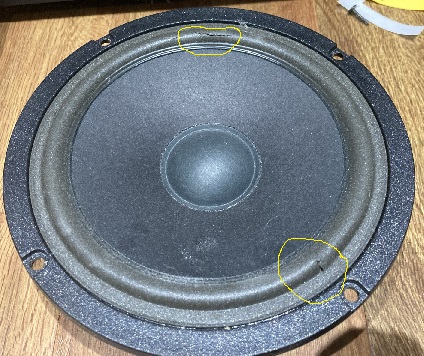
Last time this happened I was a bit worried that I wouldn’t be able to source replacements, as the original Audax AP170MN2 speakers weren’t available any more from Mission, and the same fit Audax AP170M0 I used were getting hard to find (and I suspect by then were old stock).
Things were actually better this time. Barrowbiker’s Replacing the sub-bass driver on a Mission FS2-S pointed me to Visaton W170 speakers available from CPC:
A high quality bass/mid-range driver designed as replacement for many loudspeakers from AR, Gale, IMF and Mission. Stiffened paper cone and a generous magnet ensure high power handling and good bass extension.
They aren’t perfect, as the plastic surround is just a bit too high for the cover to fit properly, but at least my surround sound is back to sounding great.
Living room PC
Continuing the theme of home cinema related stuff…
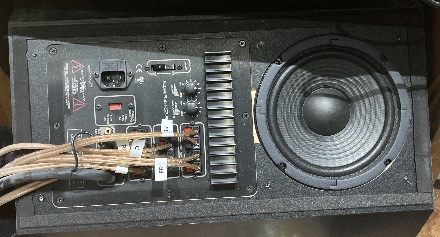
The Gigabyte Brix I’d had in the home cinema room got replaced by an Amazon Fire 4k, as it’s just easier for watching stuff on Netflix and Prime. But over the last year we’ve been watching lots of comedy etc. on Zoom, and having cables dangle to my laptop wasn’t the best – especially with the new pup.
So the Brix has found a new lease of life on the back of the living room PC. It’s great for watching Zoom events, and I’ve also added a camera for when we’re doing calls (and party games) with friends and family.
Stream Deck
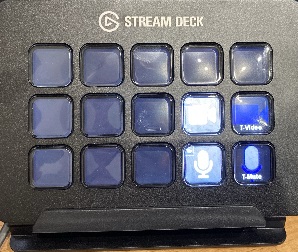
Switching to the recurrent theme of ‘we’re all streamers now’, I finally got myself an Elgato Stream Deck, which now gives me handy buttons for mute/unmute and start/stop video. It works better with Zoom (proper API?) than Teams (which needs the right window in focus to send key presses).
reMarkable 2
Last month I mentioned buying a reMarkable 2 e-ink tablet, noting that ‘I’ve not had much opportunity to take advantage of it’. With my daughter going back to online learning she was looking for a better way to handle pdfs, so I suggested she try out my tablet. I suspect that I won’t be getting it back, as it seems to be the perfect device for (as my friend Paul would put it) ‘Victorian schooling on Microsoft Teams’.
As I concluded in a thread on Twitter:
I expect that within the decade we’ll have such things at a $50 price point, and for replacing paper in schools I can see them working in ways that iPads and laptops haven’t been able to (because it turned out iPads & Chomebooks/Macbooks != education digital transformation)
Transferwise and eTrade
I’ve been a fan of Transferwise for many years, as I find myself having to hold and spend $ and € enough for them to save me a bunch of hassle and expense with their multi currency account with its associated debit card.
I also have an eTrade account that’s a relic of my time working in banks, and where I now hold my personal account of US stocks. It would be great if I could seamlessly (and freely) move $ between eTrade and Transferwise via the ACH Network, but when I tried it was fine sending stuff to eTrade, but I couldn’t pull from Transferwise.
That’s now fixed :) Transferwise recently rolled out new accounts for $, and it seems that the do support debits as well as credits. At least that’s what I thought… A few days later I got this in an email:
Right now, you can use your account details to have money sent to your account, but merchants can’t debit money from it. We’re working on that, but in the meantime, any debits will be rejected.
Some merchants charge a fee for rejected debits, so please don’t set up any direct debits just yet. We’ll let you know as soon as we’ve added this feature.
So maybe things have been soft launched, but they’re not quite ready yet.
Car shopping, MOT checker
My daughter is almost old enough to start driving, so I’ve been shopping around for a used car for her. Something that’s proved invaluable is the MOT history service, as it seems pretty useful at helping to flag lemons with maintenance issues, and cars with dodgy history (like one promising looking car that had gone backwards 2000 miles in a year).
Dry first half, Elvis AF
In the past I’ve done Dry January, but recently that’s become more like Dry first half of January, as my now adult son usually likes to toast his birthday.
This time around I was pleased to see that Brewdog have released an alcohol free version of one of the beers I usually have in the fridge – Elvis AF.

It’s easily the nicest alcohol free beer I’ve ever tried. So nice in fact that I’d seriously consider a can of it in place of the 6.5% original. Here’s hoping that it’s not a ‘Limited Edition’ for too long (or that at least it’s back next January).
Raspberry Pi Stuff
I finally got around to installing the ESXi 7 Fling for Raspberry Pi, following the guide on the official blog. I’m sure it will come in handy as Arm becomes more mainstream in the cloud and on people’s laps.
I also moved my home DNS from OpenWRT to some Pis. Bind on OpenWRT kept on crashing with out of memory errors, and I think Pis using SSD rather than SD cards, and on UPSs should be sufficiently reliable.
Beating Beat Saber
I got a little board of trying to Full Combo FitBeat on Expert and GHOST and What the Cat?! on Hard, so I bought another music pack – Green Day. Like the Panic! at the Disco, the levels are pretty easy, and I found myself getting through initial runs on Expert with just a few misses. I’m enjoying the music though; Green Day is one of those bands that fell into the young kids void of my musical experience, and clearly I missed out.
Note
[1] In the end, not a film I’d greatly recommend. I wanted to like it, but there was just too much bad science to be believable, and that ruined it for me.
Filed under: monthly_update, Raspberry Pi | 2 Comments
Tags: ARM, Bind, Brewdog, Brix, dachshund, DNS, dry January, Elvis AF, ESXi, eTrade, Mission, MOT, OpenWRT, puppy, Raspberry Pi, reMarkable, speaker, Stream Deck, Transferwise, VMware, woofer, Zoom
December 2020
I don’t think I’ve ever been so glad for a holiday break… In this post, a brief pupdate, some new toys, People Powered, the history of PCBs, toiletry vacations, and some Pi and VR stuff.
Pupdate
Max continues to grow, and get used to being part of the household. It’s been really fun having him around during December, though I do wish for days with better weather so we’ll both be a bit keener about going out.

Stuff I bought
reMarkable 2
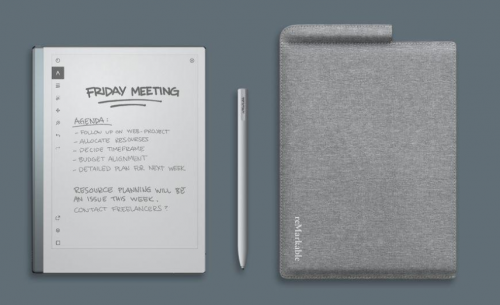
A few folk I know bought and raved about the original reMarkable e-ink tablet, so when I heard there was a new version available I couldn’t resist. So far I’ve not had much opportunity to take advantage of it, but my first impression is that it feels almost like an alien artefact in terms of size, weight and build quality – it is remarkable.
Snugs
I’ve had some custom fit Snugs Flight earphones for a few years, and love the comfort, noise isolation and sound quality. I also wear earplugs when riding my motorbike, which I consider necessary to avoid hearing damage from engine and wind noise. So when Snugs released their new Moto product I thought it would be good to get something potentially more comfortable than disposable earplugs, which can become a bit of a pain after an hour or so, and that would also allow me to listen to music and/or navigation instructions.
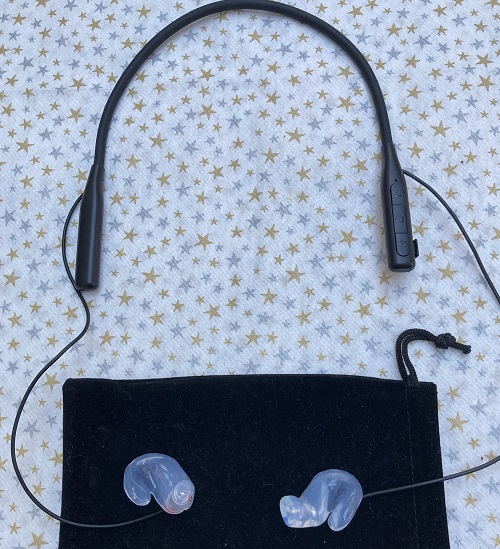
The fit is VERY different from my Flight earphones, as it fills much more of my ear. But they seem very comfortable. Due to it being winter I’ve not yet had the chance to try them out properly, so I’ll report back once the roads are dry again.
Quad Lock
If I’m going to be listening to my phone (especially for nav instructions) then I don’t really want it in my pocket, I’d like to have it visible.
After watching a few online reviews the Quad Lock system came out as the one that was most solid and least intrusive. Since it was Black Friday sale time I ended up getting the case for my iPhone SE 2020 plus the bike mount and a couple of car mounts.

I’ve yet to try the bike mount on the road, but the car system is super nice and easy.

AirPods Pro Crackle
I’ve already had replacements for both sides, and it seems the left one is failing again. Here’s hoping that Apple have finally got a fix into how they’re making them. At least they’re now acknowledging the problem, and have extended the replacement period past the original one year warranty with the AirPods Pro Service Program for Sound Issues.
History of PCBs
Bryan Cantrill asked on Twitter:
I’ve been enjoying “Pick, Place, Podcast” from @CircuitHub and @WAssembly (ht:
@kc8apf !), and now I’m searching in vain for a book on the history of the PCB; surely there is such a thing?!
I though if there was such a thing then surely OSHPark‘s Drew Fustini (@pdp7) would know about it.
In there end it seems that there isn’t a book, but there is this wonderful video from Zack Freedman:
People Powered
A few months ago I was chatting to Dick Morrell about various things, and I brought up my incomprehension of the (mostly Indian) audience joining some webcasts that I’d been doing with colleagues. He suggested that I should read Jono Bacon’s People Powered.
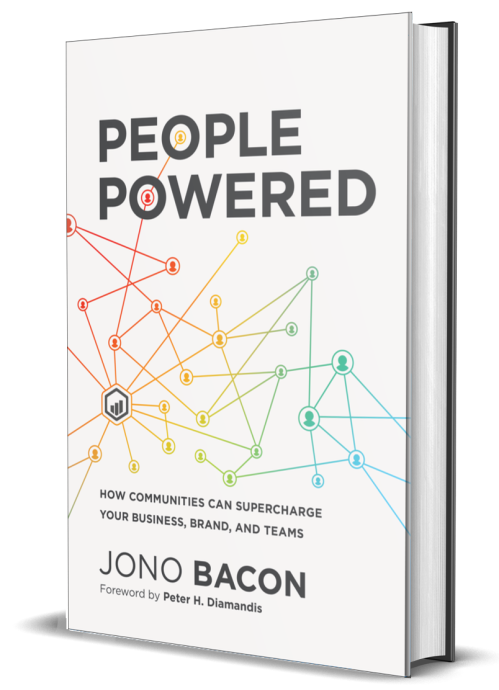
In the end the book didn’t answer my specific question, but it does do a great job on building and leading communities (and leadership in business more generally), and I find myself recommending it to people, which is always a good sign. My journey through it was helped by Jono running a book club over the past few months, which if nothing else gave me encouragement to get through the chapters (and along the way I switched from eBook to audio book so I could walk and ‘read’ at the same time).
Toiletry Vacations
I used to travel a fair bit, and I’d generally bring home the little bottles of hotel shampoo, conditioner and shower gell as they’re handy for when the kids are visiting friends or when we have house guests. Well… neither of those things have been happening much lately, so I decided to start using up my stash to break up the monotony of pandemic groundhog days. It’s amazing the difference that having some different smells at the start of the day makes, especially when those smells evoke places visited in the past.
Raspberry Pi stuff
When I started booting my Pi4 from an external SSD I just cable tied it to the underside of my passive heatsink, but I might have been tempted by this neat modular case system if it had been around at the time.
Beating Beat Saber
Some good progress, helped by more VR workouts during vacation time…
I’ve finally managed to Full Combo all of the OST3 levels on Expert. Burning Sands finally succumbed, and Full Charge came a few days later. Meanwhile Crab Rave from the Extras also fell into place for me, leaving just FitBeat before I’m done with that set.
I’m still finding the Camellia levels too tough on Expert, so I’m ploughing on with Hard for those, with only GHOST and What the Cat?! left to do.
Having played so much on the bundled levels I finally caved and bought a music pack from Panic! at the Disco. I’m loving the songs, but the play is quite easy, so I came close to clearing all the levels on first run at Expert, and they all fell within a few tries.
I’ve also managed to complete some OST1 levels at Expert Plus, which I once considered impossibly fast and complex – so practice does bring progress :)
Filed under: could_do_better, did_do_better, monthly_update, technology, travel | Leave a Comment
Tags: AirPods, Beat Saber, crackle, earphones, headphones, Jono Bacon, motorbike, motorcycle, PCB, people powered, Quad Lock, reMarkable, Snugs, toiletry, vr
November 2020
There’s been lots happening this month, with the puppy growing, some IT failures, moving on from some previously loved products and services, more updates on streaming and VR, and a few things I forgot in October…
Puppy
He’s done a lot of growing from the start of the month:

To the end of the month:

and seems to have less of a look of ‘hey, I borrowed this dog costume, but it’s a few sizes too big’.
He’s also allowed outside now, so walkies have begun.
More photos on my daily #pupdate.
IT failures
November hasn’t been a great month for my home kit behaving itself.
NAS drive failure
I woke up one morning to the dog whining, and when I got downstairs I could hear the NAS whining. A quick look at the admin console revealed a failed HGST 4TB drive :(
I’ve been seeing warnings for a little while about the volume filling up, so time for an overdue upgrade and a 4 pack of 8TB Seagate IronWolf Pros.
It took a couple of days for the RAID5 array to resilver, which isn’t too shabby.
I then had a little adventure upgrading the filesystem to 64bit in order to make all the extra space usable.
Interrupted Power Supplies
‘The WiFi’s not working’ turned out to be a failure of the coat cupboard UPS that runs the NAS, router and a few other odds and ends. I’ve written before about how ropey power can be in my neighbourhood, which means I have a bunch of UPSs, which also means that I’m too frequently dealing with failures.
It seems that battery failures take out a UPS even when it has a good mains supply, and I’ve never seen any warning of battery issues :/ Luckily this time around I was able to get a replacement battery in half an hour from my local ScrewFix, and everything was back as it should be.
I keep hoping that Eric Raymond’s UPSide project for an open source hardware UPS comes to fruition, but maybe I should just buy a Tesla Powerwall? Meanwhile I replaced the batteries in a Sweex UPS that died on me a few years ago, and that’s back working, and I proactively replaced the battery on my other PowerWalker 650, as that was a similar vintage to the one that failed.
Leaving Three
I’ve used Three for my personal mobile phone for over 6 years, and really valued their ‘Go Roam’ service especially when I’ve been in the US a lot. Unfortunately they’ve developed a nasty habit of treating existing customers like fools, and hiking up tariffs.
Last year I called them, and eventually got to a satisfactory deal (though still not as good as what they were offering new SIM only customers). It took something like an hour, and I vowed not to repeat the process. This time I just requested a porting authorization code (PAC) for my phone number and switched to PlusNet (a mobile network virtual operator [MVNO] running on EE’s network). I may return to Three when travel resumes. But for the time being it seems like they didn’t want me as a customer, in what seems like an exercise in reversion marketing. It’s not even like I’ve been using the service much – I’d expect the most costly thing I’ve done in the last year or so was that call centre contact for the last renewal :/
At the start of the year I had 6 Three contracts – 3 for my devices and 3 for family members. We’re now down to 2; and that’s not down to any antipathy or service issues – it’s been purely about avoiding exploitative price hikes.
So long Pinner, hello Pushpin
I’ve been using Pinboard.in for bookmarking since the first demise of del.icio.us; so when I got an iPhone again almost five years ago I bought Pinner as the app to save and recall stuff.
Pinner served me well over the years, though it wasn’t perfect, and didn’t seem capable of syncing all 13,000+ bookmarks I’ve collected. But it hasn’t been updated in over 3 years, and it seems iOS 14 has introduced breaking changes. So time to move on.
I’m still getting used to Pushpin, but it seems to get all the basics right
We’re all streamers now
I’m talking next month at GitHub Universe and they sent me some kit to make sure that I can be seen and heard properly:

The Logitech Brio webcam is pretty amazing in terms of configurability and the sharpness of the resulting video; and the JLAB microphone seems to work better with my conferencing setup than the Yanmai mic I was previously using (following Terence Eden’s review).
Here’s what things look like on my side of the camera on my (messy) desk:

Since taking the photo I got a Newer mic boom, and I have a Stream Deck control panel on my Christmas list.
VR
Prescription lenses
I’ve never loved the experience of using glasses with my Oculus Quest, so I finally ordered some lenses from VR Optician. They took a couple of weeks to arrive, and were dead easy to fit.
It’s a revelation not having to fiddle to get the headset around my glasses, or worry about eyelash smudges or fogging; though I do find I need to be very careful about headset placement to get a sharp view. It’s also weird to take off the headset and find myself part blind to the outside world.
I’d held off initially due to worrying about shared use of the headset, and constantly having to swap out lenses. But I’m now pretty sure I’m the only person using it, and having the lenses is a definite plus.
Beating Beat Saber
The quest continues… after finally getting Full Combo at Expert on all OST levels 1 & 2 I’ve been chipping away at OST 3 and Extras, with now only a couple remaining on each. Meanwhile I’ve got quite into the Camelia levels, though they’re much tougher, so I’m doing those on Hard rather than Expert.
Pi Stuff
I’ve written previously about using the High Quality camera as a USB OTG webcam, and now somebody’s written some Ansible scripts to automate the process :)
Things I forgot from October
Another Now
I’ve enjoyed much of Yannis Varoufakis’s earlier work, so his latest, Another Now, was an obvious one to buy, and I got the audiobook for my daily (pre new pup) walks.

The use of a connection between ‘many worlds’ to present ideas about alternatives to neoliberal capitalism is an engaging way of presenting ideas, but it didn’t leave me wholly convinced that he had a realistic way of tackling the status quo. But nevertheless an enjoyable read/listen.
Starblinken
The Starblinken recreates a little visual prop from the Millennium Falcon, and was on sale for May the 4th. But when it arrived the weather was too nice, and my spare time got expended outside. Once the cold dark days arrived it was time for some assembly.

It was a fun little project to put together, and I like how Dave managed to get a scene from the film into the PCB.
Filed under: could_do_better, monthly_update, Raspberry Pi, technology | Leave a Comment
Tags: Another Now, battery, Beat Saber, bookmark, Brio, dachshund, economics, electronics, JLAB, kit, lenses, mic, microphone, mobile, NAS, Pinboard, pinboard.in. pinner, PlusNet, prescription, puppy, pushpin, Star Wars, Starblinken, streaming, Three, UPS, vr, webcam
October 2020
Puppy
It wasn’t long after we lost Dougal that we decided the house just felt wrong without a dog. So… new puppy – Maximus:

More photos on my daily #pupdate
We’re all streamers now
Returning to this theme, I’ve added a few more links to my streaming tag on Pinboard.
Lighting
On the recommendation of Ken Corless, I bought a Neewer LED lamp that I fitted above my secondary monitor. The version with a mains adapter was ridiculously more expensive than the one without, so I got the battery only version. That was fine until the battery ran out. So I grabbed a spare 12v power supply and… it didn’t fit because the lamp has a weird size power socket. Luckily I was able to get an adapter for the adapter – 5.5mm x 2.1mm Female Socket to 2.5mm Male Plug.
Pi Stuff
35mm lenses on HQ camera
@biglesp tweeted about using Canon EF lenses with the HQ camera so I ordered an adapter for FD lenses, as I have quite a stash of them from a kit I bought some time ago to satisfy my childhood desire to have a Canon A-1.
Here’s a selfie I took using my 50mm f1.4 S.S.C. lens:

Lots of bokeh potential with wide lenses, and some pretty significant cropping going from 35mm frame to 6.3mm (1/2.3″) sensor, turning my 50mm ‘standard’ lens into something like a 280mm equivalent telephoto (so if I try my 300mm lens it will become a 1660mm telescope).
M2 SSD case
I’ve written in the past about using my Pi4 with an SSD, using a USB3 to SATA adapter, but another option is this case, with M.2. Meanwhile the Pi4 based compute module has arrived, which breaks out PCIe opening up the option of attaching SSDs through that interface for even better performance.
ESXi for the Pi
Is now available is a ‘fling‘ from VMware. I’ve not had the chance to try it yet, and when I do I’ll probably try putting Ubuntu 20.10 on as a guest alongside Raspbian.
Filed under: monthly_update, photography, Raspberry Pi, technology, wibble | Leave a Comment
Tags: adapter, camera, Canon, ESXi, FD, LED, Neewer, puppy, Raspberry Pi, ssd, streaming
September 2020
As the family has gone back to school September seems to have whizzed by, with fewer interesting things to report on as life settles back to a weekly routine. I’ve mentioned the punctuations of comedy nights and online whisky tastings before, so there’s little new to report…
Frontline Live
My amazing friend Katz Kiely set up Frontline Live in the early days of the pandemic to help frontline health workers get access to desperately needed personal protective equipment (PPE).
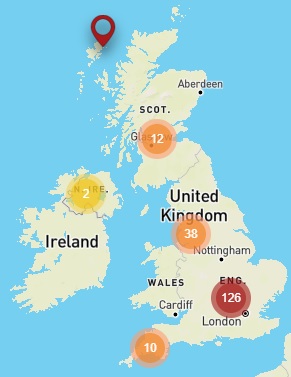
As things have settled down she thought that the site should be backed by a registered charity, which I’m pleased to say I’m now a trustee for (after it got set up in what seemed like record breaking time – about a day and a half from submitting the docs to getting approval).
Covatar
My colleague Caitlin McDonald got an awesome new profile pic from Covatar. So I got one for myself. What do you think?

Tech stuff
Dapr
I got to know Mark Chmarny during his time at Google, but he’s now at Microsoft working on Azure stuff and he suggested I take a look at Dapr. It’s described as ‘An event-driven, portable runtime for building microservices on cloud and edge.’, and there’s a bunch of good samples and examples for it on GitHub, which provides an easy on ramp for people to get started.
NATS
Long time readers of this blog will know that I’ve been a fan of asynchronous messaging and event driven architectures since the early 2000s as the Advanced Message Queuing Protocol (AMQP) took shape. I first met Derek Collison as he did due diligence on VMware’s acquisition of RabbitMQ, and he’s somebody who’s been into messaging since pretty much the beginning, as Tibco created Rendezvous and then Enterprise Message Service (EMS nee E4JMS).
NATS came along as Derek was creating Apcera, and since the sale of that platform he’s focussed all of his attention on the messaging platform.
I remain convinced that most of the complexity in enterprise architectures comes from people using HTTP in places where it’s just not suitable (then having to layer on all types of guff to make up for that). I’d previously hoped that AMQP would provide salvation, and at one stage the ubiquity of RabbitMQ underlying infrastructure software fooled me that it had happened. But the complexity seems to be piling on above the platforms again, so I’m hoping that NATS can help people get back to simpler and cleaner architectures.
Raspberry Pi stuff
I wrote a while ago about booting my Pi4 from a USB3 attached SSD. This post from Jeff Geerling provides a deeper look at UASP, TRIM and performance.
Filed under: monthly_update, Raspberry Pi, technology, wibble | 1 Comment
Tags: Covatar, Dapr, Frontline Live, NATS, Raspberry Pi
August 2020
ICYMI
It’s been something of a busy month for blogging, with posts on Cloud Migration, Java, the UK exam fiasco, Hugo. and RIP Dougal.
BBQ
The new Kamado Joe that I mentioned last month got its first run, which looked good, but ended up being a little dry:

Hawksmore @ Home
The Hawksmore at Home BBQ Box came out much better :)

Shelf
I made a shelf to go beside the BBQ for extra prep area using some left over kitchen worktop:
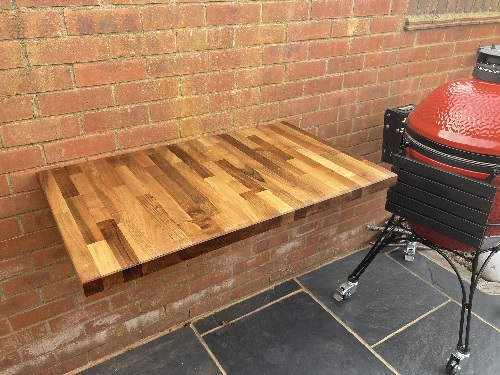
It looks lovely, but despite the yacht varnish it already seems to be bowing and delaminating, so I’d be surprised if it lasts through a UK winter.
Cote de boeuf
Some friends recommended Handcross Butchers, which is local(ish), does online ordering and delivers to my area. I got a Cote de boeuf, which turned out amazingly – quite possibly the best steak I’ve ever had.

Could – Should – Would
On of my favourite finds on the web this month was ‘An Officer’s Guide to Breaking the Rules‘:
The CO hated being told that I couldn’t do something when he knew full well that I could but that the rules didn’t allow it. So I agreed that we would discuss such things in the following terms: Could – Should – Would. In the first instance I would explain what could be done, what was physically possible given the resources at our disposal, without any of the constraints of the rules. I would then explain what should be done to be compliant with the rules, regulations, policy, etc. Finally, we would have a conversation about what we would do, under what circumstances and when the operational imperative would justify setting aside certain rules in order to achieve the intent. It worked. I never told him something was impossible when it wasn’t, but we also (frequently) made defensible risk-based decisions to break the rules when the circumstances justified it.
WSL2 and VSCode
For many years I’ve been using a combination of Git Bash and Atom for development, but times change, and better tools emerge, so I’ve pretty much entirely switched to using Windows Subsystem for Linux (WSL) version 2 as my command line home and VSCode as my IDE. It’s very pleasant and productive.
GitHub Actions
I’ve also been trying out GitHub Actions for Continuous Integration (CI) and Continuous Delivery (CD), and they’re just like how I expected code pipelines to work (rather than the complexity horror show of Jenkins and its menagerie of plugins). Here’s my example repo hugo-learn-action-example.
New role
There have been a lot of changes at DXC since Mike Salvino took over as the new CEO almost a year ago, and as part of that wave of change I’ve taken a new role as CTO for Modern Apps & Cloud Native. I describe the new job as:
leading customer adoption of platforms, continuous delivery, and modern languages and frameworks
My post on ‘What are Modern Applications?‘ from earlier in the year provides a good background on the space I’m moving into.
1990
Following a pointer from Charles Stross I bought myself the DVD box set of 1990, dubbed 1984+6. It’s a never repeated 1970s TV series starring Edward Woodward looking at a dystopian future UK under the boot of a Home Office ‘Public Control Department’. Right now, it seems far too close to a prequel of what 2021 post Brexit England is going to look like (except in the show it seems one of the few counterbalances to government power is EU membership and the European Convention on Human Rights (ECHR) – protections that are being torn away).
One thing that does seem consistent between fictional 1990 and real life 2020 is that the politicians and their civil servants seem greatly concerned with what the press has to say about them; or as I put it on Twitter, “Government of the press, by the press, for the press”
Beating Beat Saber
Beat Saber remains my favourite Oculus Quest game, and I use it for ‘fitness gaming’ workouts on the days that I’m not hitting the cross trainer. For the last few months I’ve been slogging through the levels of OST1 & OST2 to get ‘full combo’ at Expert level, and this month I finally cracked the final holdouts with ‘Unlimited Power’ and ‘Balearic Pumping’. Onwards with OST3 – ‘Give A Little Love’ and ‘Reason for Living’ have succumbed already; I expect ‘Burning Sands’ will be the last to fall, as it’s very long and complex.
I’ve found (particularly at Expert level) that getting full combos takes a different technique to getting high scores. I’ve been using a gentler, less energetic approach to making sure I make all the cuts, rather than high movement slashes through every block. I’ll be going back over some levels to see if I can push my Bs to As to Ss (and maybe even SSs), but ultimately I know I’m not top class at the game from my rankings (and also that I totally can’t keep up with Expert Plus levels).
For what it’s worth, I share my brother’s ire at Oculus deprecating their standalone IDs in favour of Facebook logins.
Filed under: monthly_update, technology, wibble | Leave a Comment
Tags: Actions, BBQ, Beat Saber, CD, CI, cloud native, constraints, DIY, github, Modern Apps, Oculus, Quest, vr, VSCode, WSL2
RIP Dougal
Born on 22 May 2005, Dougal came home with us on 16 July 2005:

He loved hanging out with other dogs, and had to run hard to keep up since he was little:

He loved exploring the local woods, and would join me for my daily trips to the shop.

Just last weekend some other dog walkers were asking his age and couldn’t believe he was 15 (many people still though he was a pup).

I know they’re all good dogs. He was a very good dog, and we’re going to miss him a lot.
Filed under: wibble | 2 Comments
Tags: dog, Dougal, Westie
Multiple single pages in Hugo
TL;DR
Replace layouts/index.html with layouts/_default/single.html in your chosen theme. The home page for the site will be created from content/_index.md and additional pages can be created at content/pagename/index.md (NB no _ before index that time).
Background
$daughter0 has offered to build web sites for some friends and family members, which means she’s learning various aspects of web development, and I’m helping out with pointers, getting dev environments up and running, source control, hosting etc.
She found a theme that she liked for Jekyll (the default static page generator used by GitHub) in the shape of Hyde, but we quickly realised that was a (too typical for Ruby these days) journey into broken and deprecated dependency hell.
Luckily there’s a port of Hyde to Hugo, and having used Hugo for some work stuff I knew it was simple to use and actively maintained (thanks Steve Francia).
It didn’t take us too long to get a basic single page site customised with the right look and feel and published to GitHub pages.
And then she wanted another page, which took us into the oxymoronic world of multiple single pages.
The answer is right there in the docs
If you read carefully enough, the page on content organisation explains how things work. It’s just that like everything with super powerful and flexible frameworks, it shows how to do many things in many ways, which can make it hard for the uninitiated to see the wood for the trees.
When I finally figured it out the conversation went something like this:
$d0 – is it easy or hard?
me – easy.
$d0 – if it’s easy then am I stupid for not figuring it out?
me – no, because I’ve been right there with you scratching my head about it too.
For the record we spent far too much time picking through ‘Need multiple static pages – home, about, contact, prices etc.‘ and ‘Hugo: adding more pages to single-page themes‘. Sometimes Google and Stack Overflow have all the answers, and sometimes you’re digging through stuff that was overtaken by events dozens of versions back.
Docs are hard
Hugo’s docs are good, but there’s a lot there to understand, and for any given site it’s likely that you’ll need a small subset of functionality. So it’s really hard for the uninitiated to determine what they need to learn, and what’s superfluous.
There are also some great 3rd party intros out there, like Chuxin Huang’s ‘Noobs guide to Hugo‘; but if you follow somebody else’s footsteps you end up at the same destination. And nobody really wants a website that looks just like another. The whole point is customisation, but minimising the effort and blast radius of that customisation.
My own example
I’ve dropped a minimal Hugo/Hyde site demoing multiple single pages onto GitHub at cpswan/hyde-msp-example
Filed under: howto | Leave a Comment
Tags: development, Hugo, Hyde, index.md, multiple, single page, static, web, _index.md
Winners and losers
TL;DR
Standardised tests like A Levels will inevitably have winners and losers, and in normal circumstances those people will usually know why they won or lost. For the losers it’s likely that they experienced some bad luck; but the key point here is that experience – they know why things didn’t work out. When that experience of bad luck gets replaced by an algorithm handing out bad luck outcomes it’s easy to see how a sense of injustice quickly builds; as the connection between experience and outcome has been severed.
Background
This is a post about the unfolding high school ‘exam’ fiasco in the UK, where 18-year-olds are getting their A Levels that are the gateway to University, and 16-year-olds are about to get their GCSEs.
In any process like this there are inevitably winners and losers…
In an ordinary year
Winners:
- The kid who went through just the right past papers, so the exam hits the stuff they prepared for
- The kid who slacked off all the way through, but pulled it out of the bag in a final push for the exams
Losers:
- The kid who was upset because their dog died that morning
- The kid who got ill
- The kid who worked hard all year, but somehow fluffed it on the day
2020 was going to be different
With exams cancelled because of corona virus there were always going to be different winners and losers, because supposedly kids were going to be assessed based on evidence they’d been able to provide through to March:
Winners:
- Kids that worked hard all the way through
- Kids who dodged that bad exam day
Losers:
- Kids who slacked off all the way through, but planned on pulling it out of the bag in a final push for the exams
But not like that
It seems that the government decided it would be far too much trouble to look at evidence for individuals (even as a means of refining their model)[1], which leads to different winners and losers:
Winners:
- Kids who go to schools that have previously done well (especially private schools[2])
Losers:
- Outstanding kids going to historically poorly performing schools.
Even ignoring any work done over the past 2 years, the latter point could have been re-calibrated for by paying some attention to past GCSE results. The kid who got 9 A*s at a school that never previously had anybody getting any A*s is exactly the sort of outlier that data scientists live for[3].
The bad luck lottery
As noted above, in an ordinary year there will be a bunch of kids who are unlucky. Something happens on the vital day/week/month that makes them unable to meet their own expectations.
But to keep 2020 the same as 2017-2019[4] means handing out bad luck by algorithm, and that leads to an experiential gap that comes with a massive sense of discrimination.
If your dog died, or you got ill, or you fluffed it on the day then you know about that – it happened to you. There’s a correlation between lived experience and outcome.
But there were no exams, which means there can’t be any bad luck on exam day, which in turn means that a giant dollop of bad luck has been handed out to kids where there’s no correlation between lived experience and outcome. They just feel shafted, because they have been.
Matt Day perfectly sums up how ridiculous it would be for us to hand out bad luck in other aspects of life to keep the statistics in line:

Joining the fight
I just chipped in to the Good Law Project ‘Justice for A Level Students‘ campaign, and there’s also a campaign for Grading Algorithm: Judicial Review from Foxglove.
Conclusion
Any standardised testing process will have winners and losers, and we’re used to situations where bad luck leads to bad outcomes. I don’t think anybody’s comfortable with those same bad outcomes being handed out by algorithm, especially when it seems that the algorithm has been designed to preserve historic inequality.
Notes
[1] The BBC’s ‘Why did the A-level algorithm say no?‘ provides a good overview, and I’ve collected some more on the combo of ‘education’ and ‘algorithm’ PinBoard tags.
[2] I’m not writing this to ding private schools – they’re an ongoing part of structural inequality that I’ve willingly participated in myself, and for my own kids.
[3] Though it seems that Ofqual scared off the good statisticians and data scientists with NDAs that seem like the prequel to a cover up.
[4] The best description I’ve read of what happened is that grades were handed out to ‘ghosts of past students‘ rather than paying any attention to the 2020 individuals.
Filed under: wibble | 1 Comment
Tags: A-Level, algorithm, exams, GCSE, losers, luck, Ofqual, testing, winners


 Chris Swan's Weblog