The DXC Blogs – Install Docker
Originally published internally 24 Dec 2015:
Install Docker, because it gives you installation superpowers for many other things.
Install Docker, so that you don’t have to install Ansible, or Python, or Golang, or Greylog, or pretty much whatever else you were needing to install.
Install Docker, so that the next Yak you shave will be a pre shaved Yak for somebody else.
Retrospective
This internal post was mostly just a signpost to the public post I wrote that day. We subsequently used Docker as the basis for the ‘infrastructure as code boot camp’ and spent some of the workshops explaining how much time it saved.
Filed under: Docker, DXC blogs | 1 Comment
Tags: Docker
Originally published internally 15 Dec 2015:
I recently came to a realisation that every hire I’ve made has been for an aptitude to change rather than a given set of skills. This makes my most important interview question ‘how do you keep up to date with tech?’.
Tech is changing all the time. I constantly hear statements that the rate of change is accelerating – something that I don’t happen to believe, but even with a steady rate of change like Moore’s law there’s a whole lot to keep track of. The fire hose of tech news can be hard to manage, so it’s important to have good filters. My friend JP Rangaswami often quotes Clay Shirky’s ‘filter failure‘ when talking about the danger of information overload.
My coarse filters are Feedly [1] and Twitter, but there’s a much reduced output from that, which is stuff that I find interesting enough to add to Pinboard in case I want to go back to it later. Even that’s probably too much – I bookmark a ton of stuff on politics, religion, law and order and all manner of other subjects that have nothing to do with tech. As a new iteration of my earlier experiment into directed social bookmarking I’ve created a feed that’s being pulled into the technical design council (TDC) Slack team, simply by tagging things tdc. Pinboard very usefully allows me to easily turn that into an RSS feed for consumption by your favourite aggregator (which brings us back to Feedly if you don’t already use one, and the sad demise of Google Reader).
[1] I could probably share my Feedly feed list if anybody is interested – though beware that it’s large and very specifically tuned to things I’m interested in.
Retrospective
I keep on tagging things with ‘tdc’ and occasionally I bump into somebody who’s following along and finding some use. This post also unearthed a bunch of Feedly fans.
Original comments
I’m not going to post the original comments, as they’re mostly self referential to the people who made them, and hence impossible to psuedonymise.
I did myself however discover some Feedly sharing options, and posted this great ‘2 Kinds of People‘ cartoon:

Filed under: DXC blogs | Leave a Comment
Tags: Feedly, news, Pinboard, rss, twitter
This was originally published internally on 4 Dec 2015, my 4th day at CSC:
My first few days have made me think carefully about where I see value.
This is what’s emerging:
- I value code with documentation, samples and examples more than just code, because code with documentation, samples and examples gives us a repeatable offering that we can take to market.
- I value code more than slides, because code gives us a prototype that we can take to a brave customer who’s willing to share risk.
- I value slides more than ideas, because slides give us a way to share concepts and engage with customers about what might be.
- I value ideas on their own least of all, which is not to say that ideas have no value. Ideas are what drive us forward, and DXC Technology is full of brilliant people with great ideas – I just want to see the best ones evolve as quickly as possible into code with documentation, samples and example.
BTW code, and it’s documentation, samples and examples lives in a repository such as GitHub – if you’re not already using Git (and GitHub) then learn about it here – Learn Git | Codecademy
Retrospective
After just a few days it was already clear to me that far too much ‘solutioning’ was being done in PowerPoint rather than tools that could touch a production environment. Those slides were worthless compared to code. Not completely worthless, but definitely worth less. Of course code on its own isn’t great either, as successful projects need great documentation, samples and examples; a theme that I return to later.
Original comments
CN:
+1 Chris :-)
There was a great session from EMC and Puppet at VMworld which said think of Github/Version-Controlled code as “Live Documentation”.
The presenter made everyone promise never to log in to a server again before we left!
Whilst it’s not possible to stick to that when you have legacy customers on systems that can’t, yet, accept any change to them to be pushed out centrally it’s a great goal to have in the back of your mind when doing anything. “If this change works it need to go back into the build code/docs”
Filed under: DXC blogs | 2 Comments
Tags: documentation, git, github
The DXC Blogs – an intro
Over the course of the next few weeks I’m planning to publish a bunch of posts that originally went onto my internal CSC blog hosted on ‘C3’ (Jive). My reasons for doing this are:
- C3 is being shut down as part of the merger of CSC and HPE Enterprise Services (ES) to create DXC.technology, and I see little point in moving them to a SharePoint site.
- My new colleagues who’ve come from ES haven’t been able to see what I posted on C3.
- Our CTO Dan Hushon is very keen that we communicate ‘outside in’ rather than relying on internal communications systems.
- James Governor’s recent ‘Further thoughts on 10x engineers‘ explains quite clearly that communication is an essential part of (tech) leadership. It’s great to see so many people who are friends, colleagues and that I’ve hosted at conferences mentioned in the post, and I obviously need to up my game to join them.
I’m going to try to publish one post per day, hopefully along with psuedonyminised comments. There may be some minor edits to make up for the shift from private to public, and I’ll also s/CSC/DXC Technology/. I’m planning to add a retrospective to each post.
Filed under: DXC blogs | 18 Comments
Tags: DXC
A colleague asked me the other day how to get started with GitHub on a Windows machine, and I ended up doing a quick screen share to show him my usual setup. Thinking that it’s likely a common question I’ve put together a quick screencast of installing Git Bash and Atom on Windows, and using them with GitHub.
Filed under: howto | 2 Comments
Tags: ATOM, bash, git, github, howto, Windows
Wilful ignorance
I’m not much of a podcast fan, but I came across Sam Harris interviewing Michael Hayden and set aside some time to listen to it. I wasn’t expecting much common ground between the interviewer and interviewee, but a mutual dislike of Glenn Greenwald seemed to get their rapport clicked into place, and I very much enjoyed their discussion.
The purpose of this post is that there’s a massive logical discrepancy in what Hayden said. If it’s true then the (US) Intelligence Agencies are being wilfully ignorant, something that I find unlikely.
The President’s BlackBerry
In one part of the interview Hayden talks about how Obama had to be weaned off his BlackBerry after taking office at the White House.
The assertion: Every embassy in Washington would be able to tap in to the President’s email traffic.
Why this seems unlikely: BlackBerries had a reputation for strong end to end encryption, so much so that there has been controversy over whether they could be permitted in India. For sure any (foreign) agency with proximity to the cell tower near the White House would be able to intercept the encrypted traffic, but that should be pretty much useless to them. At worst traffic pattern analysis would reveal when the device was sending and receiving.
Tipping their hand: This could reveal that NSA already knew how to intercept BlackBerry traffic and that it was simple enough that they also expected less friendly agencies to be able to do the same and/or their was a TEMPEST issue with the handsets that presented a vulnerability to anybody with sufficient proximity (‘anybody on Pennsylvania Avenue’).
Trump Tower Wire Taps
Elsewhere in the interview Hayden marvelled at how the discourse around Trump Tower wiretapping allegations had taken place so publicly, with key agency representatives going on the record to say that Obama had not authorised spying on the Trump campaign/President Elect.
The assertion: Trump Tower wasn’t under surveillance.
Why this seems unlikely: Hayden had talked earlier in the interview about domestic metadata collection for back tracing, and how even his own call records would be amongst that horde. So it would be exceptional for Trump Tower not to be included. Perhaps the point here is the oft argued content versus metadata; but in a world of ‘we kill people based on metadata’ it matters not; and the metadata would be plenty to build the graph of Trumps relationships and influence.
Putting it together
Trump is well known for using an Android phone, which is likely a lot less secure than Obama’s BlackBerry, so if the earlier assertions are true, then any (foreign) agency in New York would be all over his comms and collecting their ‘Kompromat‘. If the latter assertion is also true then the US are basically saying that they left the field open for foreigners, but didn’t take a look themselves; and that would be wilful ignorance. At the very least I’d expect a ‘this is what we (and everybody else) got on you before you were sworn in, and that’s why things need to change’ type conversation and the business as usual activities behind it. Maybe I’m wrong; maybe wilful ignorance is part of how the game is played.
Filed under: wibble | Leave a Comment
Tags: privacy, SIGINT
Lovely
My wife took me out to the ‘Supper Club‘ at the newly opened Waitrose in Haywards Heath earlier this week. I wouldn’t be writing about it here if the Daily Mail hadn’t done a hatchet job review that totally misaligns with own experience.

That’s me in the blue shirt with my back to the camera
The title of this post comes from the head chef’s introduction to the menu. He must have said ‘lovely’ over a dozen times.
Let’s examine some of the headline quotes..
‘I could make a better dessert at home’
Well, that was kind of the point. Diners were given a pack as they left with recipe cards so that they could use (Waitrose sourced ingredients) to make everything at home.
‘1970s style’ food
This seems to be a standard attack for anywhere with a prawn cocktail on the menu, since that’s probably the pinnacle of 70s retro chic; though I expect the same rock could be thrown at the chicken fricassee. I’m a child of the 70s, and I happen to like a good prawn cocktail. As fate would have it this was my second prawn cocktail in the week, and the second time where the menu had offered ‘brown prawns’. It wasn’t as good as the ‘half pint of shell on brown prawns with Marie rose sauce’ I got on Monday at the Lockhart Tavern, which came with many prawns that had roe attached, but that was the best prawn cocktail I’ve ever had. The Waitrose one was a lot less fiddly and time consuming.
Small portions and long waits
I’m not a small chap, and the quantity of food was more than enough for me (and I didn’t take any potatoes or eat half of the biscuits that came with my cheese). They were also pretty generous with the wine, with bottles left on the table for us to help ourselves. Mineral water was also free flowing at no extra expense for those choosing not to drink.
I never felt like I was waiting, which could have been just because the wine and conversation was flowing. There was also no wait to pay at the end (my most hated part of the usual restaurant experience) – just say goodbyes and walk away.
My own view
The communal seating wouldn’t have been my choice, but I’m an introvert at heart so I wouldn’t generally sit and chat to strangers. But these were nice middle class Waitrose buying strangers, and the conversation was in the end what made it an entertaining night out.
£70 for dinner for two would have also bought us dinner and a few craft beers up the road at the recently opened Lockhart Tavern, my new favourite in Haywards Heath. It wouldn’t have bought us 3 courses with bubbly, still wine, mineral water etc.
I enjoyed the food, I enjoyed the format, I’ll be back again for a new menu if they keep doing it. I might even try the chicken fricassee recipe at home (and if I have one ruined expectation it’s that I expected more emphasis on how to cook the meals). It was lovely.
It’s also worth noting that the #waitrosesupperclub Tweets belie the Mail’s version of events, and I’m told it’s the same over on Facebook.
Filed under: cooking, wibble | Leave a Comment
Tags: dining, news
InfoQ – Intel Launch Optane SSD
Intel recently launched their 3D XPoint non-volatile memory (NVM) under the brand name of Optane. The SSD label in some of the branding might imply that it’s a different type of durable storage, but the technology is aimed at applications that would normally use RAM. This marks the beginning of the end for the compromise between in memory and persistent, as Optane is touted as offering the best of both worlds – DRAM performance and SSD durability.
Filed under: InfoQ news | Leave a Comment
Tags: 3D XPoint, cache, Optane, RAM, ssd
TL;DR
I started a new job yesterday that boils down to applying data driven (re)design for operations (DevOps) to what’s now one of the largest Global IT Services companies. After leaving the startup world for ‘a bigger train set’ the scale just got bigger still. The size of the task ahead seems initially daunting, but much of what needs to be done has already been figured out, and there’s a great team around me.

If you’re not interested in the personal journey and mergers and acquisitions stuff here then skip ahead to ‘So what does a Deliver CTO actually do?’ below.
Background
It seems that I only write about my work when I change jobs. This time it’s a bit different, as the company I worked for changed around me, and I ended up with (sort of) the job I was hired to do.
Yesterday CSC merged with HPE Enterprise Services (ES) to create DXC.technology. The Global Infrastructure Services (GIS) organisation that I worked for ceased to exist, and I moved to the new Global Delivery Organisation.
The story so far
I started at CSC at the beginning of December 2015 as the CTO for GIS, which with revenues in the region of $4Bn was about half the company following the spin out of the US Public Sector business to CSRA. In May 2016 I was tasked with setting up the Operations Engineering (OE) group, which I handed over to Greg Dietrich in August; and then I was asked to be general manager for the x86 and Distributed Compute business. Quite a ride over the course of 16 months.
Not quite as expected
When CSC first approached me in July 2015 it was for the job of GIS CTO, but as the hiring process was nearing the end I had an in person meeting with Steve Hilton who told me that there were plans to restructure the company along the lines of Build, Sell and Deliver. He expected to be running the Deliver piece, and he wanted me to be Deliver CTO. That was a moment where my mouth ended up saying ‘yes’ whilst the back of my head was saying ‘you need to go away and think about this, there’s still time to escape, you’ve not signed anything yet’. After some consideration, I took the job anyway; Deliver sounded a bit boring and back officey, but there was clearly lots of interesting work to be done.
I next got to see Steve a few months later when he got his leadership team together at the (then) CSC HQ in Falls Church. It was clear that not only had the organisational change not happened, but there was no sign of it starting. ‘I spoke to Mike about that last week, and he’s gone off the idea’ seemed pretty inadequate. A CEO nearing the end of a (successful) major turnaround surely couldn’t be so capricious.
It was an almost 4 month wait for a proper explanation. The public announcement of our impending merger with HPE ES made it quite clear why we were holding back on restructuring – why change CSC when it would just make integration with a similarly organised ES more difficult.
Got there in the end
So yesterday I became the Deliver CTO – the job I’d signed up for, just with a much bigger Deliver organisation.
Both sides happy
I’ve seen a lot of mergers and acquisitions during my time in the IT industry, and in almost every case there’s one side thinking they’re winning, and consequentially another side that comes away as the losers. As we’ve brought DXC Technology together it’s not felt like that. The CSC people have been positive about the move as it’s brought us from near the back of the IT services field to near the front. At the same time the (mostly ex EDS) ES people have been positive about moving away from a single vendor and becoming an independent services pure play (again).
That’s not to say that every single person is happy. Like most mergers there are ‘synergy’ savings that have been promised to Wall St, so that means a bunch of people who don’t have a seat when the music stops. Bringing together two similar organisations inevitably means that you end up with (more than) two of everything when you actually need one; and that applies particularly at senior management.
So what does a Deliver CTO actually do?
Firstly it’s worth unpacking the three letters of CTO:
- Chief – a leader, who points the way for the rest of the organisation.
- Technology – understanding the constantly changing environment, continuously learning and teaching others.
- Officer – making decisions within a delegation framework, and helping others to make decisions.
The Global Delivery Organisation encompasses everybody involved in making stuff actually happen for customers, so it covers a lot of ground; but if I grossly oversimplify it turns into two different takes on DevOps:
Internal: All in on Operational Data Mining
Operational Data Mining (ODM) is the way that we’ve been improving operations at CSC, and is a discipline that will be central to how we make DXC Technology work. It goes like this:
- Collect data exhaust from service management and ancillary systems
- Analyse to identify operational constraints
- Model the system being worked on
- Hypothesise a way to improve the system
- Experiment to see if that works
- Rinse and repeat
In terms of the ‘three DevOps ways’ of flow, feedback and continuous learning through experimentation this is clearly the third way, but it applies to the first and second too. In every case we’re trying to improve the flow of work (first way), and we’re generally trying to build systems that provide faster feedback (second way). This is quite simply the implementation of what’s in the DevOps Handbook, which is in turn everything that the manufacturing industry learned about process improvement post WW2 (Deming etc.). Science not magic, and it works.
The great thing about doing this in a company the size of DXC Technology is that the experiments can be parallelised across multiple regions and accounts. Furthermore we can identify repeat patterns and apply them with less setup cost and time.
External: Design for Operations
Build, Sell, Deliver can be conceived as a triangle, with bidirectional relationships on each vertex:
- Sell what we have Built
- Build what we can Sell
- Sell what we can Deliver
- Deliver what we have Sold
- Deliver what we have Built
- Build what we can Deliver
Here I’ll concentrate on the final point – Build what we can Deliver.
This is a point about design. We should think about design for operations when an offering is put together. It’s not enough to just build what the customer says they want (Build what we can Sell), we need to consider the delivery experience (and associated costs) for turn up on day 1 and ongoing operations from day 2 to infinity.
What we call ‘DevOps’ is just a bunch of artefacts that come from organisations that have designed for operations (which generally tend to be software as a service or software based services). This isn’t even a software thing – just about every industry evolves from design for purpose through design for manufacture and to design for operations (sometimes called design for maintenance).
Design for operations isn’t an enormously complex thing to do, it’s just about ensuring that operational considerations get included alongside other functional and non functional requirements. Once again data can be brought to bear, because we can use data about the cost of operations to drive investment decisions around the design of offerings.
An example: Modern Platform
Modern Platform is a virtual infrastructure offering that’s been designed for turnkey operation on day 1 – plug it into ‘power and ping’ and it’s ready to go after minimal configuration. This is largely achieved by the approach of using a partner engineered system, but that’s irrelevant to design for operations – it’s just pushing work into a place within the value chain that has best scope and scale.
Modern Platform provides an offering in its own right (for customers that just want [more or newer] virtual infrastructure), but also a foundation for higher order offerings like workplace and private cloud. Here the design principles can be pushed higher up the stack. If I can get a turnkey virtual infrastructure then why not a turnkey virtual desktop infrastructure? (and so on).
The challenges ahead
Top of my list is restoring/engendering psychological safety. Google’s research into differentiators for high performing teams identified it as the primary determining factor, but both organisations have been battered by years of cuts and the machinations of the merger. Now that we’re together as one we need to make as many people as possible, feel as safe as possible, as quickly as possible; we need to create belief for individuals in their place within DXC Technology.
Beyond that lies the need to reskill for a cloudier future. Ops people who are used to eyes on glass and hands on keyboard and mouse need to get familiar with the disciplines of software engineering as infrastructure becomes code. CSC came some way on that journey with Infrastructure as Code Boot Camps, but scaling that to a much larger delivery organisation will take a different approach, and there’s also a need to go broader and deeper.
To earn our share of the shared responsibility model that comes with cloud will require greater application intimacy, which needs to come both top down (business needs to app) and bottom up (infrastructure services to app). The concepts from site reliability engineering (SRE) that were used in founding the OE team will be essential, and Ian Miell shows just what it takes to achieve application intimacy in ‘Things I Learned Managing Site Reliability for Some of the World’s Busiest Gambling Sites‘.
In good company
I was attracted to CSC by Simon Wardley, Glen Robinson, Sam Johnston and JP Morgenthal joining ahead of me (and that’s before I got to properly know Dan Hushon). Those hires were clearly about growing a team that understands next generation IT. It’s a group of people who understand the need for situational awareness and mapping, who get OODA, who adapt and evolve but also learn and mentor. Since joining CSC I’ve been impressed by almost everybody I’ve met there, by their technical skill, willingness to learn, and resilience. As I’ve come to know my new ex ES colleagues they’ve impressed me too, for there’s a great deal of shared experience and shared culture in both firms. It will no doubt be a tough road ahead, but the journey will be easier with such good company.
Filed under: DXC | 6 Comments
Tags: CSC, CTO, DevOps, DXC
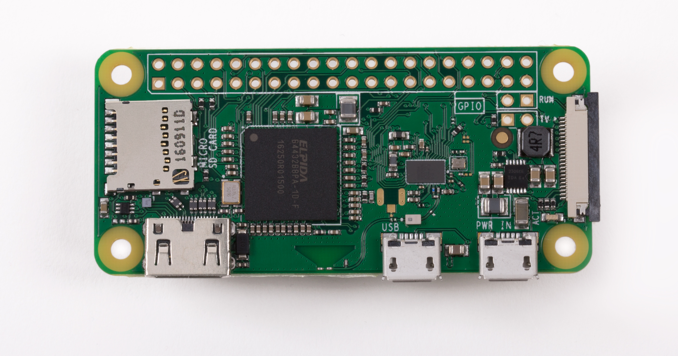
The Raspberry Pi Foundation has launched the Pi Zero W, a variant of the Pi Zero that comes with onboard WiFi and Bluetooth. At $10 it’s double the price of the Pi Zero, but still substantially cheaper than $35 for the original Raspberry Pi Model B which launched 5 years ago. By having connectivity onboard the Pi Zero W will make a much better starting point for Internet of Things (IoT) projects.
Filed under: InfoQ news, Raspberry Pi | Leave a Comment
Tags: InfoQ, Pi Zero W, Raspi, RPi


